
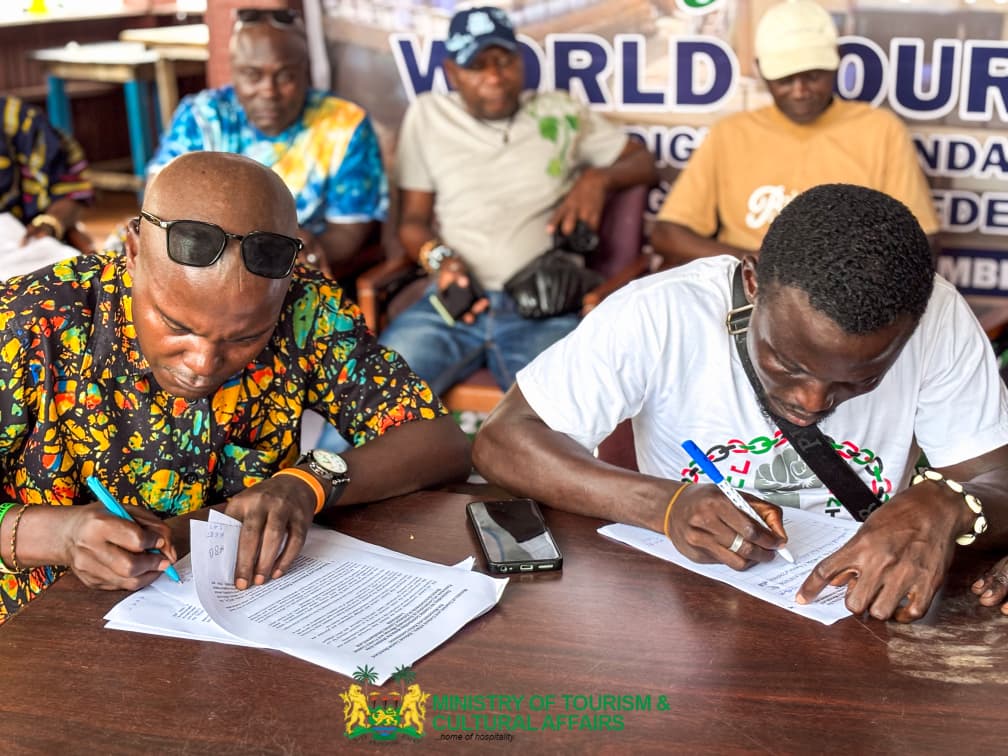
Leaders of eight coastal communities along the Western Area Peninsula have signed a landmark declaration committing to work together to sustainably manage and protect their coastal beach environments, forming a foundation for tourism development, environmental resilience, and community livelihoods.
The declaration was signed during a coastal dialogue meeting organised by the Ministry of Tourism and Cultural Affairs (MTCA) as part of activities commemorating World Tourism Day. The initiative was facilitated by the MTCA and witnessed by the National Tourist Board (NTB) and the Monuments and Relics Commission.
In the declaration, community representatives acknowledged the vital role coastal communities play in promoting environmental sustainability and safeguarding the rich natural and cultural assets that support tourism and economic growth. They recognised that the ocean connects their communities and remains an essential resource for present and future development, health and wellbeing, livelihoods, and untapped economic opportunities.








The communities further noted that tourism, cultural heritage preservation, and the promotion of Sierra Leone’s unique coastal assets are central to the country’s efforts to diversify the economy. However, they also acknowledged the increasing threats facing the Western Area Peninsula’s beaches and coastal ecosystems.
A major concern highlighted during the dialogue was the continued practice of localized sand mining, driven largely by Freetown’s growing demand for construction materials. Participants noted that this activity has contributed significantly to coastal erosion, resulting in a cumulative shoreline retreat of up to 40 meters in some locations and an estimated loss of approximately 20 million cubic meters of sand along sections of the peninsula coastline.
Through the dialogue process, community leaders admitted that human activities within their own communities have directly contributed to the degradation of the marine and coastal environment. They therefore reaffirmed the need for stronger cooperation, collective action, and long-term commitment to addressing the challenges facing their coastal ecosystems.

Among the key threats identified were climate change, illegal sand mining, natural disasters, pollution, poor waste management practices, environmental degradation, the loss of cultural and heritage sites, and criminal activities that threaten community wellbeing and sustainable livelihoods.
To address these challenges, the signatories pledged to cooperate and coordinate efforts in support of the Ministry of Tourism and Cultural Affairs and the National Tourist Board. Their commitments include strengthening environmental education and public awareness campaigns, improving safety and security at tourism destinations, tackling beach erosion and environmental degradation, promoting hygiene and sanitation, and collaborating more closely with private sector stakeholders.
The declaration also commits communities to adhering to national tourism policies, environmental regulations, and relevant laws governing the sustainable use of coastal resources. In addition, community leaders agreed to establish local conservation committees that will help monitor coastal conditions and report illegal and destructive activities affecting beaches, heritage sites, and marine ecosystems.
Speaking at the event, participants emphasised that protecting coastal environments is not only an environmental responsibility but also an economic necessity. They underscored the importance of preserving the peninsula’s beaches, cultural heritage, and natural beauty to ensure that future generations continue to benefit from tourism-related opportunities and sustainable livelihoods.
The signing of the declaration marks an important step in fostering community ownership of coastal conservation efforts and strengthening partnerships among local communities, government institutions, and development stakeholders. It also reflects a shared determination to create an enabling coastal, cultural, and heritage environment that supports sustainable tourism development while improving the quality of life for communities along the Western Area Peninsula.
With the declaration now in place, stakeholders expressed hope that the renewed spirit of collaboration will help safeguard Sierra Leone’s iconic coastline and position the Western Area Peninsula as a model for community-led coastal conservation and sustainable tourism development.