
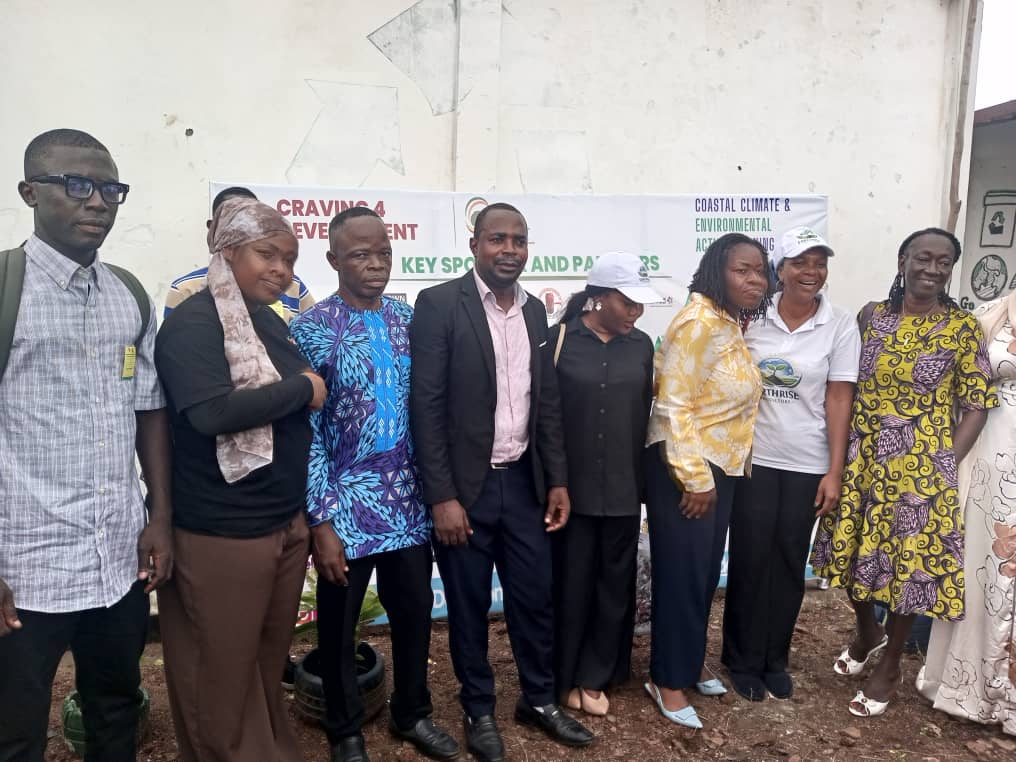
A grassroots environmental initiative that began in the coastal community of Fungiya has grown into a major regional programme, with the launch of the Coastal Future Initiative Project, aimed at empowering women and young people to tackle climate change, waste management challenges, and sustainable livelihood development.
The initiative, which will be implemented in Sierra Leone, Guinea, Liberia, Ghana, and Senegal, is rooted in the success of a pilot project led by Craving 4 Development (C4D) in Fungiya. The earlier intervention trained 100 women and youth in waste management and flood mitigation, with 71 completing the programme. Its impressive results earned international recognition and were later showcased by the African Governance Institute as a best-practice model for addressing environmental challenges in vulnerable coastal communities.
Today, that home-grown solution is widely recognised as the “Sierra Leone Model,” a testament to the country’s growing reputation for innovation in climate resilience and community-led development.
Building on this success, the Coastal Future Initiative seeks to nurture a new generation of coastal change-makers, environmental leaders, recyclers, climate resilience champions, and green entrepreneurs. Over the next six months, 800 women and young people from coastal communities will receive training in climate adaptation, waste management, circular economy principles, green entrepreneurship, and sustainable livelihood development.
Participants will also learn practical skills such as converting waste into marketable products and fashion items, producing compost from organic waste, and applying climate-smart agricultural practices. Following the training phase, the top 100 participants will receive advanced mentorship, with 40 ultimately selected for an incubation programme to develop their ideas into sustainable enterprises.
Speaking at the launch, organisers encouraged participants to embrace innovation and local creativity, emphasising that transformative ideas do not necessarily require large financial investments but can create lasting impacts for communities and nations.
Representatives from key government institutions also reaffirmed their support for the initiative. The Ministry of Tourism and Cultural Affairs representative, Tamba Sheiku Bundor, highlighted the link between sustainable coastal management and tourism development, noting that protected and well-managed coastal environments can attract investment, create jobs, and enhance cultural and tourism opportunities. He also commended the Freetown Innovation Lab for sustaining momentum from previous circular economy initiatives.
Meanwhile, the Ministry of Environment and Climate Change encouraged participants to become champions of environmental stewardship through tree planting and climate-smart agriculture, while the Ministry of Gender and Children’s Affairs stressed the importance of gender equality and inclusive participation in development programmes.
Stakeholders expressed confidence that the Coastal Future Initiative will help reduce environmental degradation, strengthen coastal resilience, create green jobs, and inspire community-led solutions across the region.
What began as a local response to flooding and waste management in Fungiya has now evolved into a regional movement, positioning Sierra Leone as a leading source of practical, scalable solutions for sustainable coastal development in West Africa.
-END-